 Add to Chrome
 Add to Firefox
 Add to Edge
Exploring Polarimetric Properties Preservation during Reconstruction of PolSAR images using Complex-valued Convolutional Neural Networks
Feb 06, 2026
The inherently complex-valued nature of Polarimetric SAR data necessitates using specialized algorithms capable of directly processing complex-valued representations. However, this aspect remains underexplored in the deep learning community, with many studies opting to convert complex signals into the real domain before applying conventional real-valued models. In this work, we leverage complex-valued neural networks and investigate the performance of complex-valued Convolutional AutoEncoders. We show that these networks can effectively compress and reconstruct fully polarimetric SAR data while preserving essential physical characteristics, as demonstrated through Pauli, Krogager, and Cameron coherent decompositions, as well as the non-coherent $H-α$ decomposition. Finally, we highlight the advantages of complex-valued neural networks over their real-valued counterparts. These insights pave the way for developing robust, physics-informed, complex-valued generative models for SAR data processing.

A computational approach to the covert and overt deployment of spatial attention
Sep 26, 2008

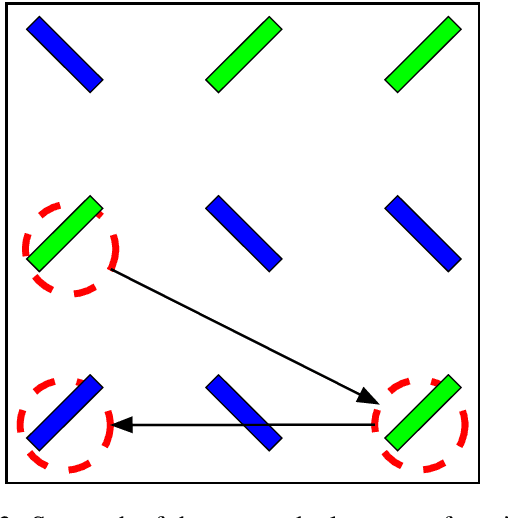
Popular computational models of visual attention tend to neglect the influence of saccadic eye movements whereas it has been shown that the primates perform on average three of them per seconds and that the neural substrate for the deployment of attention and the execution of an eye movement might considerably overlap. Here we propose a computational model in which the deployment of attention with or without a subsequent eye movement emerges from local, distributed and numerical computations.
A Computational Model of Spatial Memory Anticipation during Visual Search
Oct 09, 2006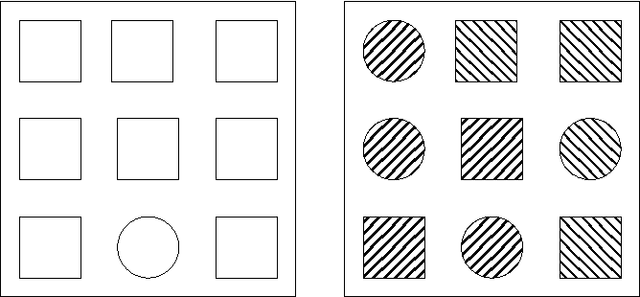
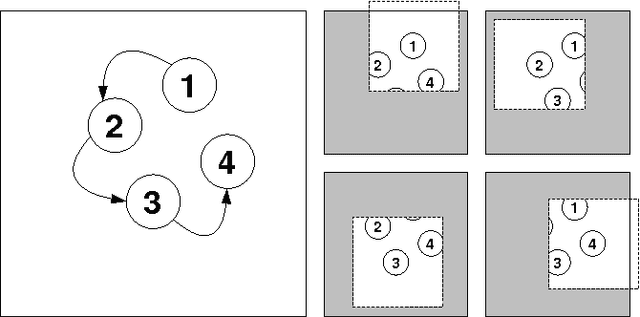
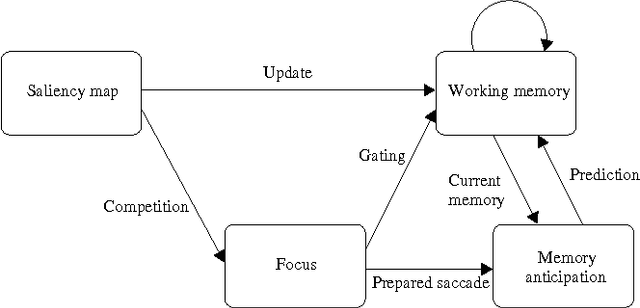
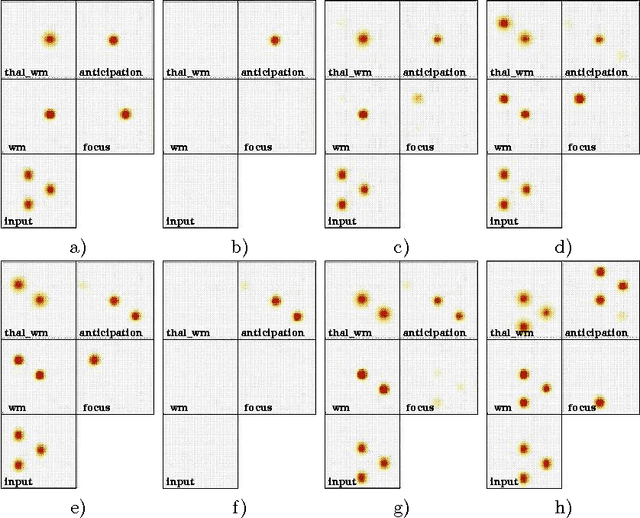
Some visual search tasks require to memorize the location of stimuli that have been previously scanned. Considerations about the eye movements raise the question of how we are able to maintain a coherent memory, despite the frequent drastically changes in the perception. In this article, we present a computational model that is able to anticipate the consequences of the eye movements on the visual perception in order to update a spatial memory